| |
|
| |
|
| |
|
| |
|
 |
CE
MARKING |
| |
Europe
is a competitive but prize market, easier to access than
ever before. Too many Indian exporters, especially small
and medium sized enterprises, avoid it because the technical
requirements for entry seem too complicated, too difficult,
or too expensive. Indian manufacturers who have successfully
accessed the European market know that the time to understand
the European system is well worth the effort. The European
Union alone is filled with affluent consumers, approximately
450 million of them. The European market is a large area
that comprises more than 25 countries.
For
the exporter, therefore, Europe as a whole has become
a market whose technical requirements have been greatly
simplified. Before the creation of the European Union,
each country imposed its own technical requirements.
Different standards and conformity assessment procedures
forced exporters to target one or two countries only,
or to forego exporting to Europe altogether. The unification
of these European countries into a European Union, and
the consequent harmonization of laws, standards, and
conformity assessment procedures, changed all that.
Perhaps
more importantly, ISO 9001 Certification is used extensively
in Europe as a condition of acceptance of a manufacturer's
product or as a means of recognition of the manufacturer's
credibility. It is important to note that a manufacturer
with a quality system in place (such as ISO 9001 QMS)
should not automatically assume that his or her products
are CE compliant because of the quality system alone.
The appropriate New Approach Directive(s) will prescribe
the correct and full route to conformity assessment.
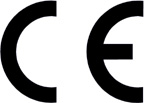
The CE Mark, which is affixed to a product or its packaging,
is considered proof that a product has met the requirements
of the harmonized European standard, or directive. “CE”
refers to Communauté Européen. Translated from the French,
this literally means European Community. The European
Commission, which administers the program, describes
the CE Mark as a “passport” for goods to be sold freely
within the internal European market. It
is required by law if the product falls under one of
the New Approach Directives. It is not a quality mark,
nor is it a mark for consumers. Intended for Member
State authorities, it is the visible sign to those authorities
that your product is in compliance with the New Approach
Directives. All manufacturers are required to affix
the CE mark to products that are governed by New Approach
Directives. CE marking on a product indicates to all
authorities that the product is in compliance with the
essential health and safety requirements of all directives
that apply to the product.
The
first step to compliance is determining which directives
apply to the product. A product may be regulated by
more than one directive. The CE mark does not disclose
which directive(s) or standards apply to the product,
nor will it indicate the method of conformity assessment
used to bring the product into compliance. This
information is provided by other accompanying documents,
such as the Declaration of Conformity. |
| |
|
| |
NEED
MORE INFORMATION ON CE MARK? Please contact
us for more detailed information. |
|
|
| |
|
|
List of New Approach directives for CE Marking |
| |
|
|
|
| |
|
Legislation |
Subject
(short title of directive) |
| |
 |
2014/35/EU |
Low Voltage
Equipment (LVD) |
 |
| |
|
2014/29/EU |
Simple Pressure
Vessels |
| |
|
2009/48/EC |
Safety of Toys |
| |
|
CPR 305/2011 |
Construction Products Regulation
(CPR) |
| |
|
2004/108/EC |
Electromagnetic
Compatibility (EMC) |
| |
|
89/686/EEC
|
Personal Protective
Equipment (PPE) |
| |
|
2014/31/EU |
Non-Automatic
Weighing Instruments |
| |
|
90/385/EEC
|
Medical Devices
- Active Implantable Medical Device Directive (AIMDD) |
| |
|
2009/142/EC
|
Appliances Burning
Gaseous Fuels |
| |
|
92/42/EEC |
New Hot-Water
Boilers |
| |
|
2014/28/EU |
Explosives for
Civil Uses |
| |
|
93/42/EEC |
Medical Devices
- General (MDD) |
| |
|
2014/34/EU
|
Equipment and
Protective Systems for Potentially Explosive
Atmospheres (ATEX) |
| |
|
2013/53/EU |
Recreational craft and personal watercraft |
| |
|
2014/90/EU |
Marine Directive |
| |
|
2014/33/EU
|
Lifts and safety components for lifts |
| |
|
2013/29/EU |
Pyrotechnic articles |
| |
|
2014/68/EU
|
Pressure Equipment
(PED) |
| |
|
2006/42/EC |
Machinery Safety |
| |
|
98/79/EC
|
Medical Devices
- In Vitro Diagnostic (IVD) |
| |
|
99/5/EC |
Radio and Telecommunications Terminal Equipment |
| |
|
2014/53/EU |
Radio Equipment |
| |
|
2009/125/EC |
Ecodesign of energy related products |
| |
|
2000/14/EC |
Noise emission in the Environment by Equipment for use outdoors |
| |
|
2000/9/EC
|
Cableway Installations
designed to Carry Persons |
| |
|
2014/32/EU |
Measuring
Instruments |
| |
|
Regulation (EU) No 305/2011 |
Construction Products |
| |
|
Regulation (EU) 2016/426 |
Appliances burning Gaseous Fuels |
| |
|
Regulation (EU) 2016/425 |
Personal Protective Equipment |
| |
|
|
|
|
| |
|
| |
Click here for other product certifications and marks |
| |
|
|
|
|
EU Notified Bodies |
| |
Together with our partnerships with EU Notified
Bodies, we can provide services for CE Marking under most of the directives.
|
|
We also provide services for: |
| |
RoHS Directive - Restriction of Hazardous Substances Directives - 2002/95/E (RoHS 1), 2011/65/EU (RoHS 2) and Directive 2015/863, Directive on the restriction of the use of certain hazardous substances in electrical and electronic equipment and Waste Electrical and Electronic Equipment Directive (WEEE) 2002/96/EC. |
| |
REACH Directive - Registration, Evaluation, Authorisation and Restriction of Chemicals (REACH). REACH addresses the production and use of chemical substances, and their potential impacts on both human health and the environment. REACH applies to all chemicals imported or produced in the EU. The European Chemicals Agency will manage the technical, scientific and administrative aspects of the REACH system. |
| |
WEEE Directive - The Waste Electrical and Electronic Equipment Directive (WEEE Directive) set collection, recycling and recovery targets for all types of electrical goods, recovered for recycling. |
| |
Battery Directive - Directive 2006/66/EC on batteries and accumulators and waste batteries and accumulators and repealing Directive 91/157/EEC, commonly known as the Battery Directive, regulates the manufacture and disposal of batteries in the European Union with the aim of improving the environmental performance of batteries and accumulators. |
| |
|
|
|
AUTHORIZED
REPRESENTATIVE |
| |
An
Authorized Representative is the person appointed by
the manufacturer and delegated to act on his or her
behalf in carrying out certain tasks required by a New
Approach Directive. This Authorized Representative must
be established inside the European Union and available
to Member State Authorities. The manufacturer, however,
is ultimately responsible for the actions carried out
by the Authorized Representative.
Manufacturers
established outside the European Union are not necessarily
required to have an Authorized Representative in the
European Union. There are exceptions, however. Manufacturers
who do not have a registered place of business in a
Member State and whose products are governed by the
Directives for Medical Devices, Active Implantable Devices
and In-vitro Diagnostic Devices, must appoint an Authorized
Representative established within the European Union.
CE Marking Directives require
that Manufacturers and Exporters, not established in the
EEC, be represented maintain a copy of their Technical
File in Europe.
RESPONSIBILITIES OF THE AUTHORIZED REPRESENTATIVE:
-
Registering of your product with the Authorities before
they are marketed (if necessary);
-
Keeping your technical file documentation ready and
available for the European Competent Authorities;
-
Be responsible for incident reporting
before Competent Authorities, in close liaison with the
Manufacturer and distributors;
-
Product Notification of serious incidents to the
Competent Authorities;
-
Represent the Manufacturer to the European Commission
for consultation in case of withdrawal of a Product by a Member State (s);
-
Keep at the disposal of the Competent
Authorities report concerning the evaluation of all data
collected during the evaluation;
-
Represent the Manufacturer before the national Competent
Authorities in the European Economic Area;
-
Be available at all times to interact
between the Manufacturer and the national Competent
Authorities;
-
Be informed by the Competent
Authorities of any incident (s);
-
Notify the Competent Authorities as to which
investigations are to be conducted;
-
Act as your primary contact point for the EU
Authorities;
-
Protect your confidentiality documentation because the
Authorized Representative is authorized to show them to the Competent
Authorities only.
|
| |
|
| |
Save time, save energy, save money by
taking advantage of our services and global expertise in
compliance management for your compliance success, cost
effective. |
| |
|
| |
|
|
|
| |
NEED
MORE INFORMATION about CE Mark, CE Consultancy, CE Certificate, CE Mark Training, CE Mark Awareness, CE Mark Audit, CE Mark Advise, CE Mark Compliance, CE Mark Documentation, RoHS, Best CE Mark Consultant, Government ISO Consultant, Approved CE Mark Consultant, Authentic CE Mark Consultant, Approved ISO Training, ISO Systems, ISO13485 Consultant, CE Directives, CE standatds, BIS Mark, BIS Consultant, CRS Consultant, CE Mark certification meaning? |
|
|
|
|
|
|